A core idea from the book
The Steam
Engine Trap
Using a new technology to do the old thing slightly better, instead of asking what new thing it now makes possible.
it comes down to one question ↓
Most people ask
How do we do what we already do, but faster?
The book asks
What is now possible that was not possible before?
A factory, in 1894.
When electric motors arrived, the first thing factory owners did was the obvious thing: pull out the steam engine and bolt an electric one into the same spot. The machines still hung off the same overhead belts, in the same cramped, multi-story building designed around a single source of power. The result was a small improvement and a lot of disappointment. The miracle technology had not changed much.
The ones who won asked a different question.
It took the better part of thirty years for a few manufacturers to ask what electricity actually made possible. The answer was not a faster engine. It was a different building: single-story, sprawling, every machine with its own small motor, the whole floor arranged around the flow of the work instead of the reach of a belt. Productivity did not rise a little. It roughly doubled. The revolution was never the motor. It was the question.
AI is the steam engine now.
Most of what we are doing with AI today is bolting the motor onto the old belts: summarize the meeting, draft the email, do the task we already do a little faster. It is useful, and it is a long way short of the point. The Steam Engine Trap is mistaking that small gain for the whole opportunity, and never asking the bigger question.
Ask the bigger question.
Before you hand a task to AI, ask what the task was really for, and what becomes possible if no one has to do it the old way at all. That is where the doubling lives. On any ordinary Tuesday it is the more valuable question to be asking, and almost nobody is asking it yet.
The technology is never the revolution. The question you ask of it is.
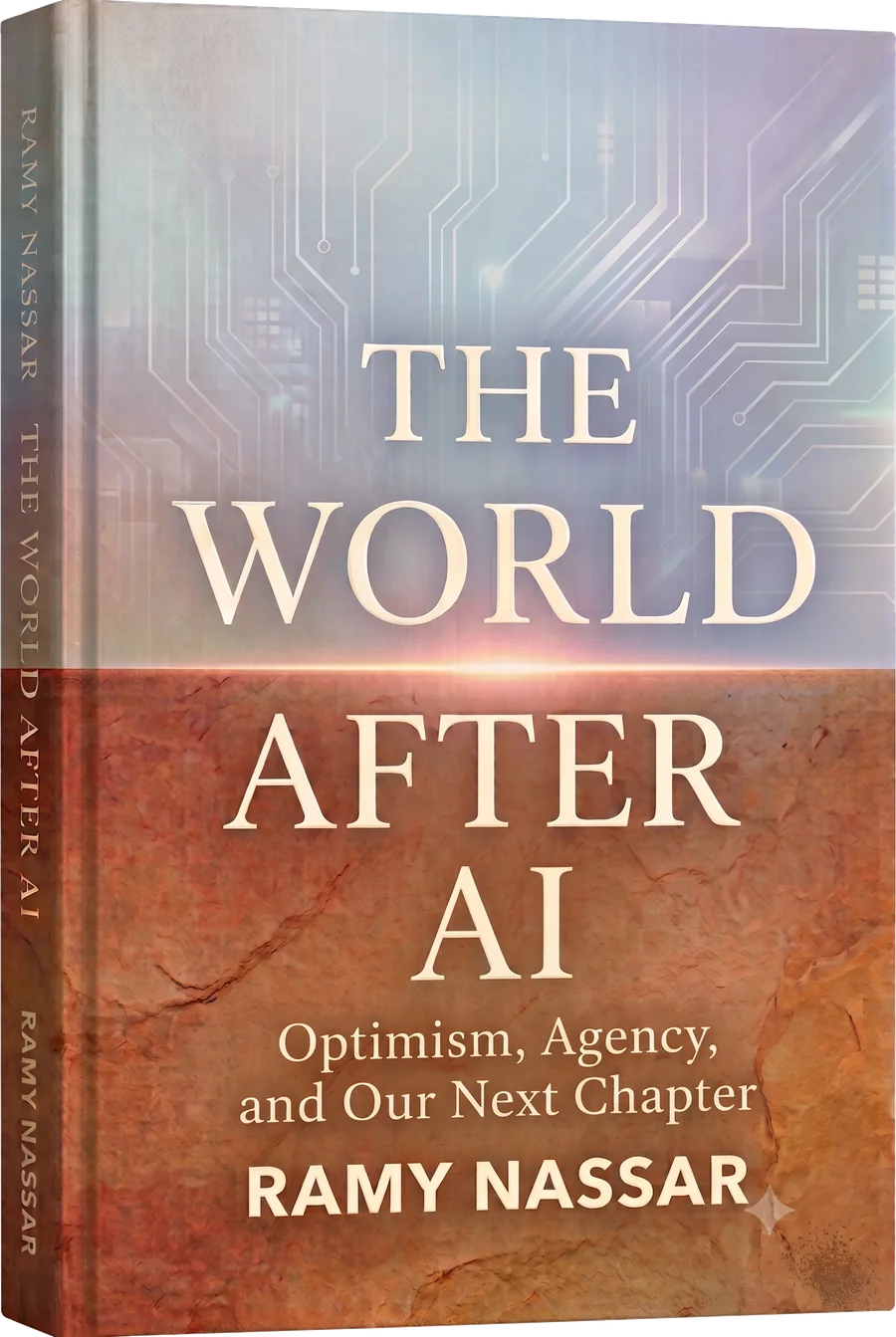
The whole argument is in the book
The World After AI lands in April 2027. Sign up and you will hear first.