A core idea from the book
The Scaling
Question
Does this technology scale equity or inequality? The answer is never automatic.
it decides who AI is for ↓
The same tool cuts both ways.
A technology powerful enough to reach the billions the old system left out is also powerful enough to concentrate wealth and power in a very few hands. The capability does not pick a side. We do.
The answer is never automatic.
Nothing about AI guarantees it lands on the side of fairness. Left alone, markets, defaults, and incentives tend to pull toward concentration. Equity is the outcome you have to choose on purpose, and keep choosing.
Ask it early, and ask it of everything.
Of every model, product, and policy: who does this include, who does it leave out, and who gets to decide? Asked early, the question is cheap to answer. Asked late, the architecture has already answered it for you.
Why it is the hopeful frame.
Because if the outcome is a choice rather than a forecast, it is still ours to make. The Scaling Question turns a fear about the future into a decision in the present.
The technology is not the variable. Whether it scales equity or inequality is a choice. The choices are.
Help it scale the right way
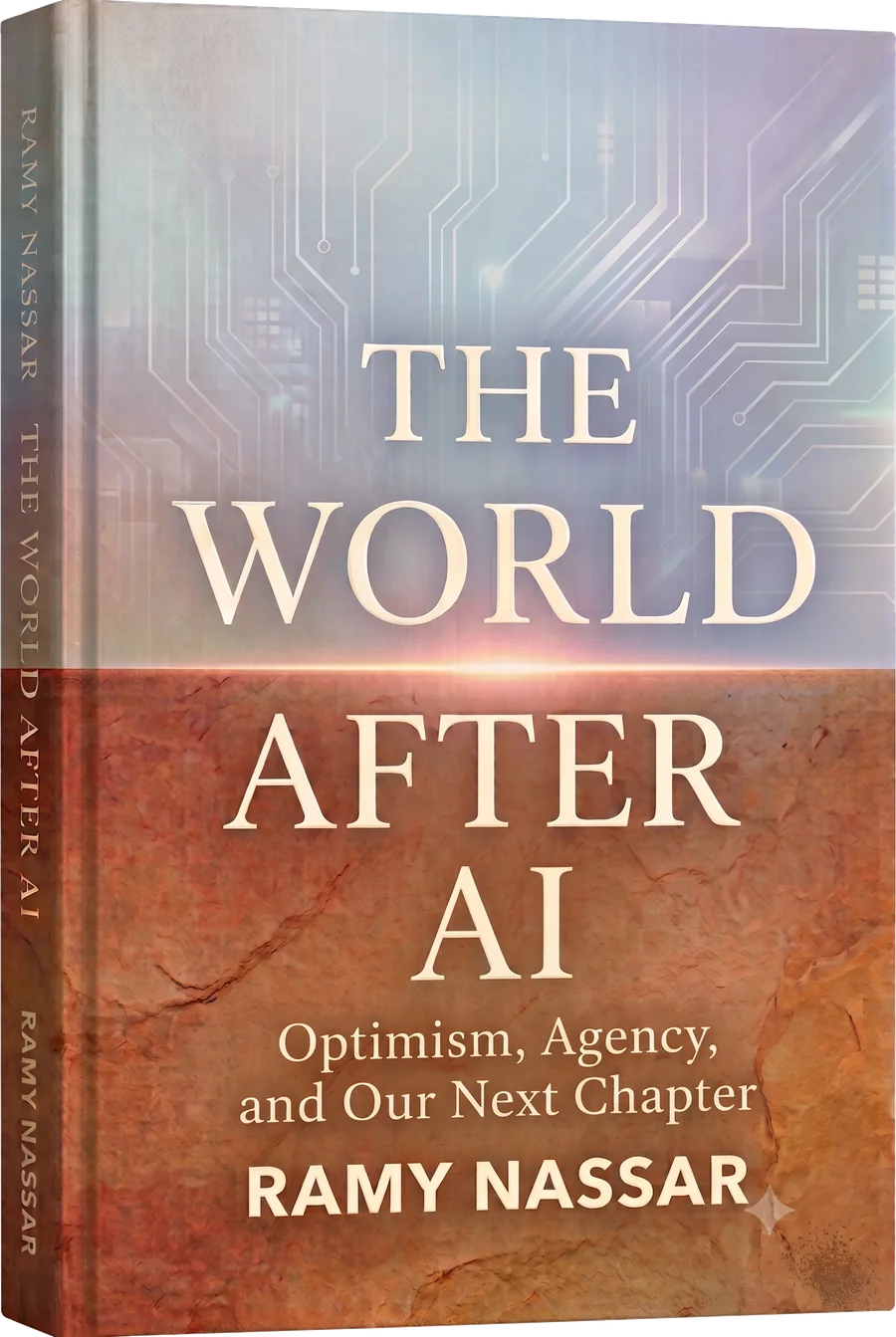
The World After AI argues the outcome is a choice, not a forecast. It lands in April 2027. Sign up and you will hear first.